

Play Therapy & Behavioral Support for Kids in Greater Denver
Specialized support for anxious, sensitive, and neurodivergent kids (ages 6–12) navigating the messy, beautiful "climb" of growing up.
WHEN WORDS FALL SHORT
A place where big feelings finally have somewhere to go.
If your child is struggling with big feelings, staying regulated, focusing at school, or finding their footing with friends, it's often a sign that something deeper is going on, whether that's a difference in how they process emotions, manage their energy, or simply experience the world. And for most kids this age, traditional talk therapy misses the mark. Expecting a child to sit across from a stranger and articulate their inner world is a little like asking them to speak a language they haven't learned yet.
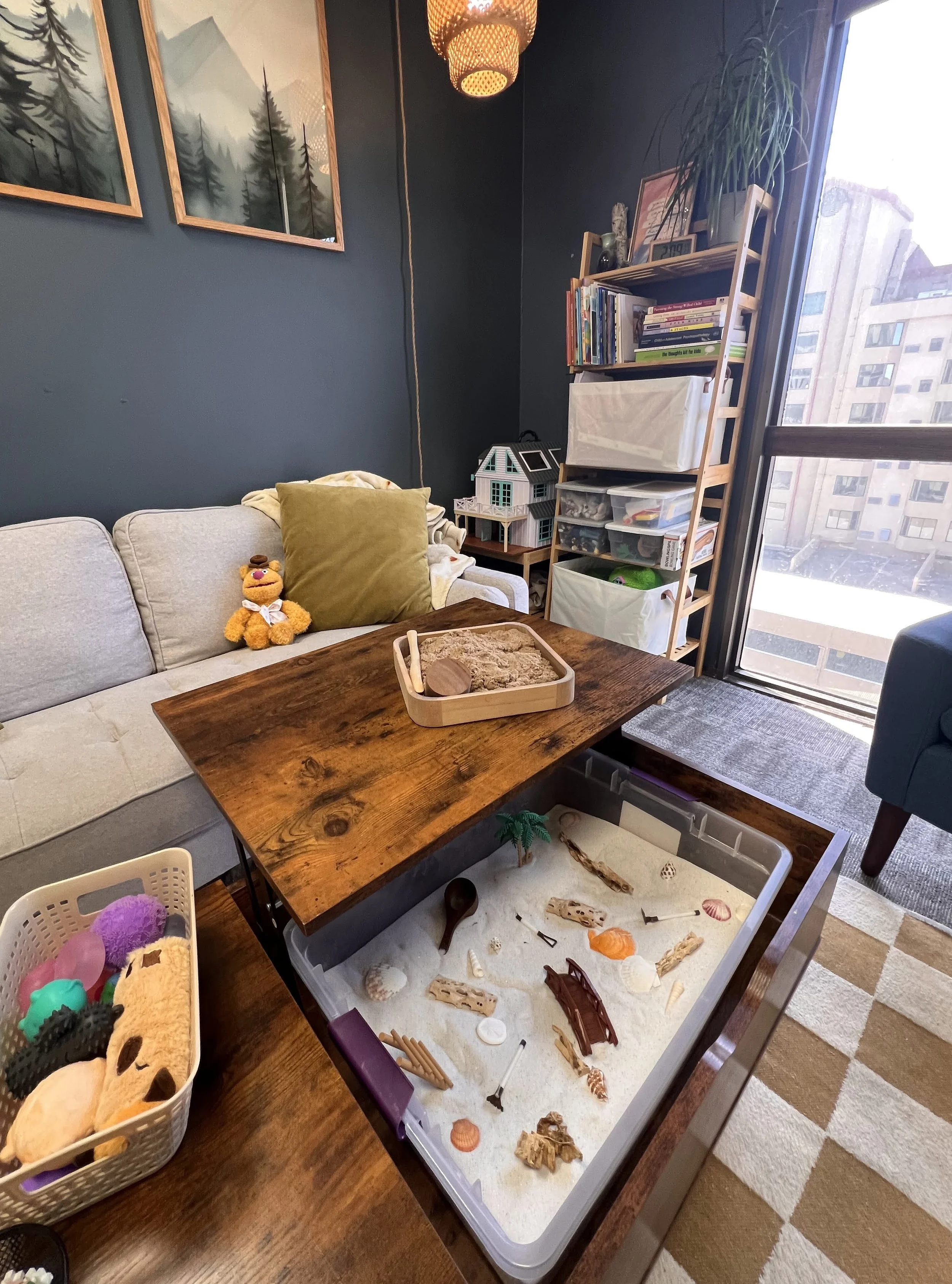
That's why every session is built around your child, not a protocol. Depending on your child's needs, how they're wired, and what they're working through, our sessions might draw from structured skill-building or getting on the floor and letting the hard stuff find a voice through play, creative expression, miniatures, or storytelling. However we work, the goal is the same: a space where your child feels safe enough to open up, and supported enough to grow.
What We Can Work on Together
➕ Decoding Big Feelings & Meltdowns
➕ Navigating Friendships
➕ School Anxiety
➕ Academic Challenges
➕ Processing Divorce
➕ Sibling and Family Conflict
➕ Family expectations
➕ Perfectionism
➕ Navigating family expectations
➕ General Worry & Mood Changes
You May Be Wondering…
-
Every "climb" is unique. Some families find the tools they need in a few months, while others benefit from a longer, steady partnership during big developmental transitions. We’ll check in regularly to ensure the pace feels right for your family.
-
That is perfectly okay! In fact, it’s expected. Play therapy is designed for exactly this reason. We don't need "talk" to have a deeply productive and healing session. If they are playing, they are communicating.
-
Absolutely. Part of being in your "pit crew" means helping translate your child’s needs to the outside world. I can provide clinical insights and documentation to help schools understand how to better support your child’s unique processing style.
-
Not at all. Whether your child has a formal diagnosis of anxiety, ADHD, Autism, or is simply a "deeply feeling" or sensitive kiddo navigating a difficult world, they deserve support. We focus on the individual needs of your child’s nervous system rather than waiting for a clinical label to provide validation and tools.
How I Can Support Your Child
Depending on your child's needs, our work together might look like structured skill-building, open-ended play, or a blend of both, all designed to meet your child where they are.

Play Therapy
Play is how children make sense of their world. For kids ages 6–12, play isn't just fun, it's their most natural language for expressing feelings, working through confusion, and processing experiences they don't yet have the words for. In play therapy, the toys, games, and creative activities are the therapy. Your child leads, and through that process, real healing, learning, and growth can happen.
-
In the therapy room, "play" offers a low-demand, high-engagement environment designed to be inclusive and accommodating to every child’s unique sensory profile, processing style, and personality.
Using figurines, puppets, or creative storytelling, children can safely re-enact confusing school moments, traumatic events, or sensory meltdowns. This creates a "safe distance" where they can process big feelings at their own pace without the pressure of direct eye contact or verbal interrogation.
When appropriate, my dog, Pickle, may also be invited to join. For children who find direct human interaction intense or draining, animals can act as a non-judgmental "co-regulator," offering a calming physical presence that makes emotional work feel safer and more grounded.
-
Because a child’s brain is still developing, they often lack the verbal complex to explain why they feel overwhelmed. Play therapy provides a developmentally appropriate outlet to process these "big feelings" without the pressure of traditional talk therapy.
While every child is different, parents typically begin to notice:
A decrease in the frequency or intensity of meltdowns.
More "flexible" thinking when plans change.
Increased ability for the child to name their needs (e.g., "I need a break" instead of shutting down).
A general sense of the child being more "at home" in their own skin.

Cognative Behavioral Therapy
Sometimes kids need more concrete tools to help them manage big feelings, navigate social situations, or shift patterns that are getting in the way at home or school. Cognitive Behavioral Therapy (CBT) can help children understand the connection between their thoughts, feelings, and behaviors in a way that's age-appropriate and engaging. The goal is to give your child practical skills they can use in real life, not just in therapy.
-
CBT for this age group is active and visual. We don't just talk about tools; we build them.
Becoming a "Brain Detective": We learn to identify "Tricky Thoughts"—those cognitive distortions that make a situation feel scarier or more frustrating than it actually is.
The Body-Action Connection: We map out how a physical sensation (like a hot face) leads to an action (like yelling). By catching the feeling early, we can choose a different tool from our kit.
Practicing with Play or Pickle: Kids often find it easier to practice "brave talk" or new coping skills by exploring them first through play, or by teaching them to Pickle first. This removes the "performance pressure" of therapy.
-
By focusing on the connection between thoughts, feelings, and actions, CBT can empower kids to:
Identify Negative Thought Patterns: Helping children recognize "brain tricks" or "stuck thinking" that leads to anxiety or sadness.
Develop Coping Strategies: Building a personalized "toolbox" of relaxation techniques and mindfulness exercises to use during stressful moments.
Improve Emotional Regulation: Teaching kids how to name their feelings and manage their intensity before they become overwhelming.
Build Problem-Solving Skills: Encouraging kids to break down large challenges into small, manageable steps.
Increase Confidence and Independence: Using "bravery challenges" to help children face fears and realize their own strength.
Strengthen Communication: Improving how children express their needs and navigate social interactions with peers and family.

Let’s Map the Trail Together
Entrusting your child’s world to a stranger is a significant step, and I don't take that responsibility lightly. Reach out today to schedule a low-pressure conversation to see if my approach feels like the right home for your child and family.